
Interview with Julie Evershed, University of Michigan
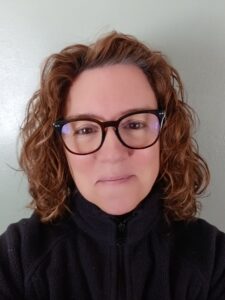
On October 5, 2026, I interviewed Julie Evershed, Director of the Language Resource Center at the University of Michigan.
DOI: https://www.doi.org/10.69732/JSGA2087
Lisa Frumkes: Julie, tell me about your job. How did you come to it?
Julie Evershed: I started at the Language Resource Center at the University of Michigan in 1998. I was fresh out of a graduate program in Information and Library Science, and I was the first information specialist they hired. Up until then, they had been building collections, but they didn’t have anyone with any background in managing them, so they thought it was time to hire someone. Luckily, my undergrad degree was in French, I loved language learning, and I had the library background, so I felt like the position was made for me.
Lisa: That feels really unique to me. You were actually trained for a part of the job that most of us really struggle with!
Julie: Yes! And between my undergrad and graduate work, I was out of school for about 10 years. During that time, I got a lot of experience in retail, supervising, marketing, sales, and the nonprofit sector. So I came in with all this practical experience as well as the education piece.
Lisa: What kind of nonprofit work did you do?
Julie: I worked for the local food bank – it was a perishable food program when I was there. Then I worked at this organization that was kind of like a reference library. That entire organization was like a language center in that it was a resource center for all the nonprofits in the community. And I was handling the library portion of it.
Lisa: And eventually you became the Director of the Language Resource Center at the University of Michigan.
Julie: I had been taking on increasingly more and more responsibility there. By the time the director position came open in 2010, I had supervisory experience along with all this other background, so when something came up, I would often speak up to offer direction. They made me interim director, because they felt like I could do the job and could keep things under control while they were looking for a director. And I then applied and got the job for real.
Right now, as the LRC director, I couldn’t even tell you what my job description is! I’m given so much agency to do what I want to do and decide where we should be going. As long I hold to the values of the college, support our languages, do community outreach, and support the liberal arts and education, there’s a lot I’m able to do.
My position at the University of Michigan is purely administrative – there’s little opportunity and no requirement to do research or to teach. Usually for LRC directors, the administrative piece is on top of everything else you have to do, so directors are generally just kind of trying to keep everything going.
I know this is also a factor for grad students who are leaving school – it’s such a leap for them, because administration isn’t necessarily something they’ve been training for.
Lisa: I agree! Most of us coming into this work don’t have that admin background, and we just say, “Well, I’m a smart person, I can figure this out.”
Julie: Yeah, and then you’re going by the seat of your pants!
I’m often surrounded by people who teach and have taught. For a long time, I really had imposter syndrome. I felt like I really wasn’t part of the group, that somehow I got in the door, even though I’m just a librarian. But in recent years, I’ve come to accept that I am bringing some important skills to the field.
Lisa: You’ve accepted myself as you are!
Julie: Yes. And I’m still very upfront. Even though I don’t teach, even though I’m not in the classroom day-to-day, I can sympathize with the teachers’ issues and I can offer resources. I think being very transparent about that is appreciated. People still want to talk to me and that’s been really reassuring.
Lisa: How has your position evolved over the years?
Julie: When I started, we were moving quickly to digital, but we still very much had an analog presence. All of our resources were physically located in the center. We had resources like movies, DVDs, books, and so on. But as things have gone digital, the LRC has been less visible, because teachers and students don’t have to come to us anymore.
I’ve been thinking about shifting how we’re seen on campus. We’ve always been at the center of all the language departments, but we’ve never marketed ourselves as a hub, or advertised what benefits that positioning brings. Whenever I have the chance, I tell people that the LRC is a hub for interaction. Some faculty have offices right next to each other and they don’t talk. But the LRC is talking to everybody. The LRC knows that someone in Romance and someone in Chinese are doing something similar, and that the two of them should talk, get together, even write a collaborative grant to get some money. Over the years, we’ve been successful with pulling people together, connecting them with others on campus, and creating a larger language teaching community, where people can find resources and learn different strategies.
We can just be a listening ear for anyone struggling with an issue. It sometimes helps just to have access to someone who understands the situation you’re in.
Lisa: This idea of making the LRC a hub for conversations and work around teaching and learning languages comes up at many campuses. Can you talk about some specific things that your LRC has done in this regard, initiatives that you feel particularly proud of?
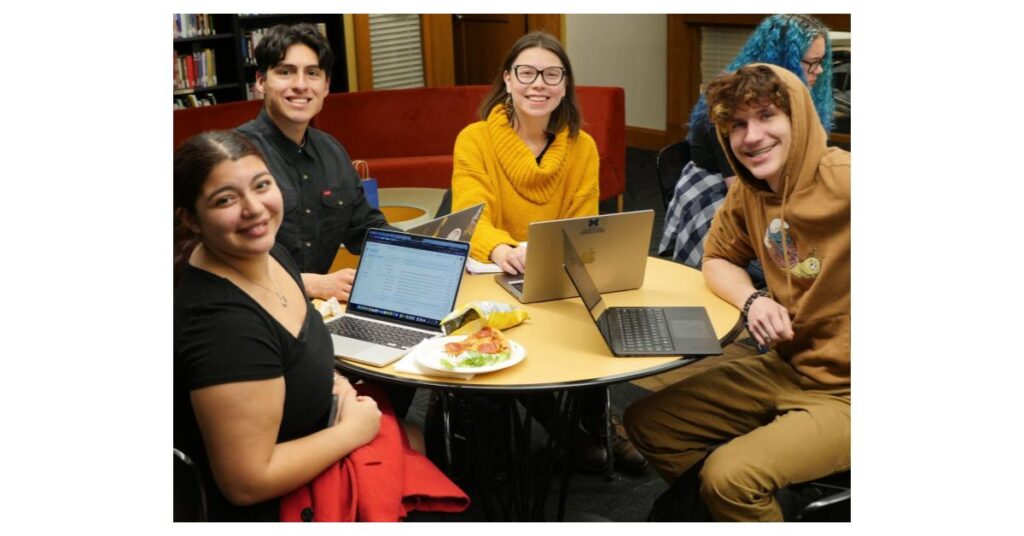
Julie: One thing we’ve started doing is supporting cultural celebrations. For example, the South Asian program did an end-of-term and New Year’s celebration. I went to Michael’s to buy craft supplies and paint. I bought food. We made games available. We made the event really visible. All of the students across all of the four or five South Asian languages that we teach came. We took lots of photos and shared them on social media, and made sure the Dean’s office knew what we were up to.
And several years ago I started a newsletter that goes out to all the teaching faculty to make them aware of the available opportunities here.
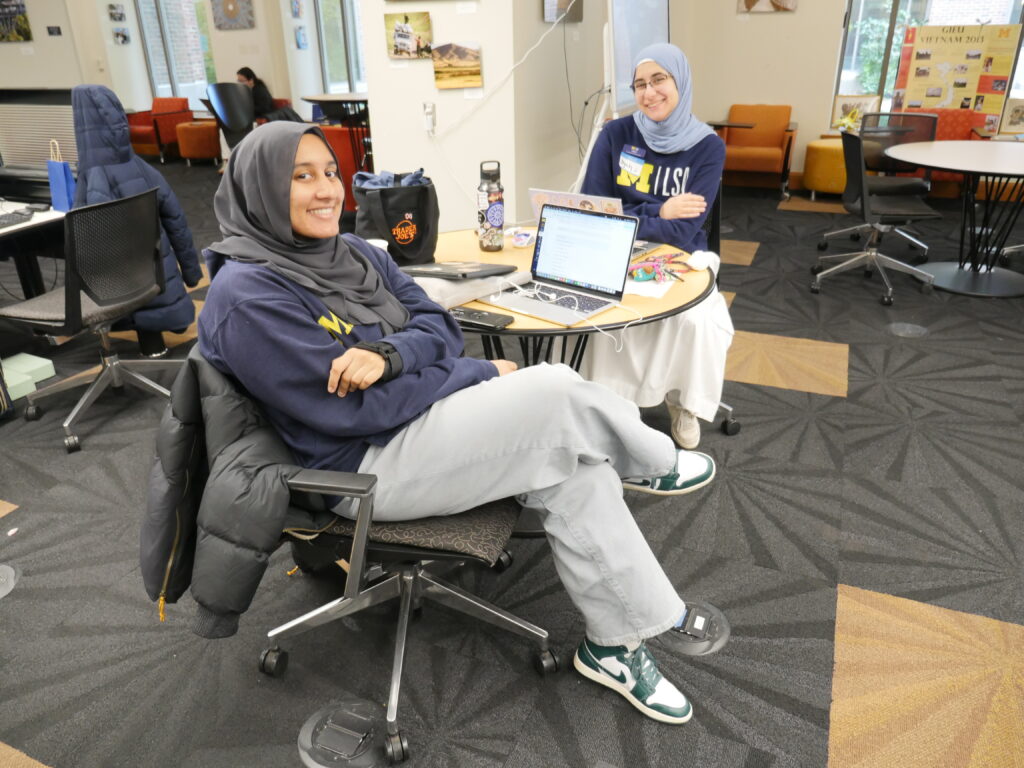
We also started purchasing games from all over, even English language games. We’ve got backgammon and cards, for example. Whatever language students want to use while playing is fine. We want to get people engaging with their groups. We’ve reaching out to student organizations to let them know that we have a space they can use for their gatherings. Often, student organizations have to pay to use a space. But if the gathering is language- and culture-related, they do not have to pay to use our space.
We also make buttons and stickers. We started with this little series called “Let’s Speak,” and we made them in all the different languages that we teach. It’s fun for the major languages, but I tell you: the looks on the students’ faces when they see them in Urdu or Quechua!
Lisa: Somehow, we never grow out of our love for stickers! And today we put them on our water bottles and on our computers. It’s a way of identifying and connecting with your community.
Julie: Yeah! Then we started our translation initiative. Prior to 2012, the LRC had not been involved in translation at all. Translation was being done in different pockets across the university by interested faculty. There wasn’t really a centralized place for that. But then our Comparative Literature department started a minor in translation studies. We wondered what we could do at the LRC to support them. So we started our language bank, which is a volunteer translation program. The language bank runs year-round, and any non-profit community group that needs translation can submit the project to us, and then our volunteers will work on it, translate it for them, and hand it back.
We also have a translation marathon, when we bring everybody together over a weekend, and we all just sit in a big room and translate together, and it is so much fun.
Lisa: That’s amazing. Is this an idea that you guys came up with, or did you draw inspiration from some other source?
Julie: We did a little East Coast tour, and I think it was at Wesleyan University that we saw they had a language bank. Theirs was run out of their community service department. The service they offered was connecting people with those who knew the language. I thought we could do that here, but I wanted to be more involved in it, because it’s not just about making a connection. We want to support our students who are translating. And we also wanted to make sure that the community partner was getting what they needed out of it.
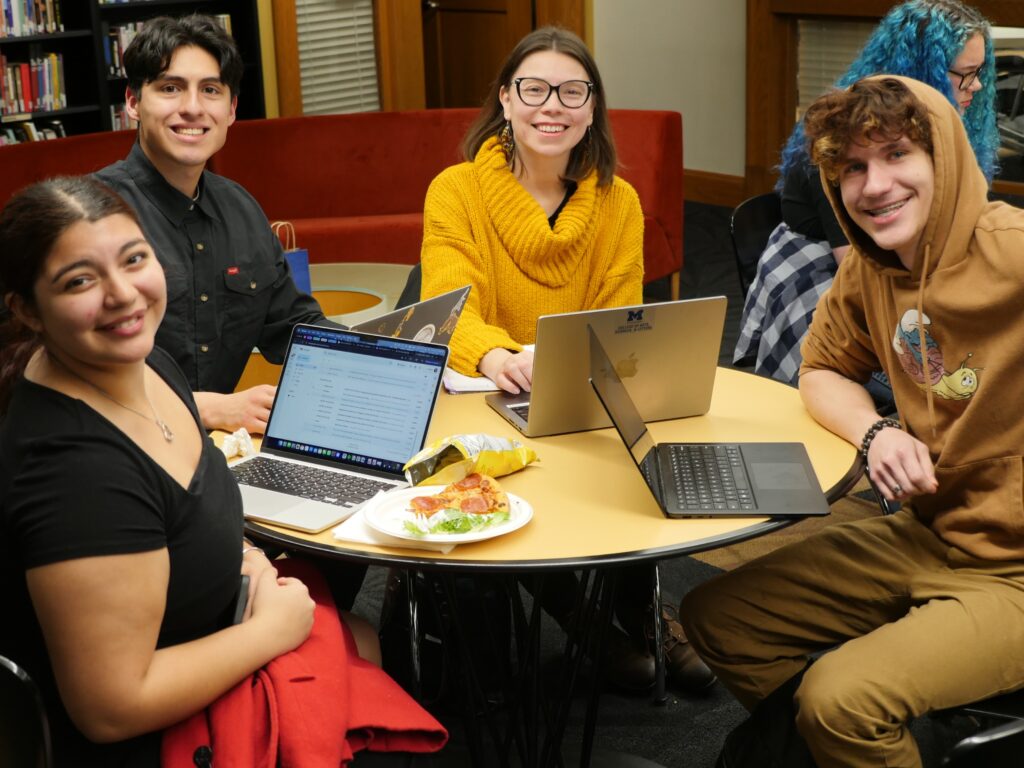
Then I was talking to Philomena Meechan [also at the University of Michigan], who has 101 million ideas – brainstorming with her is always dangerous! She said, “What about a Translate-a-Thon?” A couple of my staff had participated in hackathons, where you get together with a group to create a piece of software or an app over a weekend or other short period of time. So, taking inspiration from that, we just started doing it! We had 30 people at the first event. At our largest one, we had 200. The size varies, but people come back year after year. Even former Fulbright TAs Zoom in during subsequent years just to connect back up with us again. So that’s really sweet.
Several years ago, Rutgers found out about our language bank, and so they started one too. The University of Virginia has a similar service also. So I’m talking with these two institutions, inviting their volunteers to our Translate-a-Thon, and we’re doing a research project together. We got to go to Graz, Austria this summer to present it at a conference. So, the translation initiatives have really blown up!
Lisa: How have your translation initiatives at the LRC been working out for the Comp Lit program translation degree?
Julie: As a matter of fact, they just launched a major in translation studies last fall, in addition to the minor, and they have a graduate certificate in translation. It’s still a small program, but they’ve got a really solid cohort of students who are coming to translate. We collaborate quite closely with them. They provide some financial support for our translation marathon. They will sometimes bring our projects into their classes and work on them, which is really nice.
Lisa: What a really great, symbiotic relationship with that program! While we’re on the topic of amazing programs, is there anything else you’d like to speak about in terms of how your LRC and your role have evolved?
Julie: What’s been really interesting is the Big 10 language centers coming together. We created a language center alliance and we actually had a symposium in 2024. Even though we didn’t get funding to do it again in 2025, it still connected a bunch of us. It’s just really nice to talk to other people at other centers, and there are a couple of projects going with people across institutions. It’s just been really rewarding to be actually working towards something together.
Lisa: How did you come to be an IALLT member?
Julie: I was very lucky. The staff who were at the LRC when I joined were already part of IALLT. Lynne Crandall was the secretary of IALLT at the time. So when IALLT happened in Maryland in 1999, they just assumed I was going to go with them. Going with my new colleagues and getting introduced to people was great for me. I’m an introvert, and sometimes when I get into larger groups, it’s hard to connect. But they dragged me around and introduced me!
So when the next IALLT came around – the one at Rice University in 2001 – my director, Monika Dressler, asked me what I was going to present. So I thought I’d present about what I was doing in the library. That first presentation was a really great experience, because the community is so wonderful. After that, people kind of knew what I was doing and who I was. It just seemed really natural to connect with people there.
I’ve recently become more involved with the Michigan World Language Association. They quite often talk about how teachers don’t propose presentations for the conference. I asked myself: why not? I guess I didn’t have that problem, because I had such a strong support to start presenting. I’ve now presented at CALICO and at other events, and it’s just not a big thing for me. I tell people what I do and what my thoughts are. It’s just so interesting to see the difference between how I was brought in and how other people are so reticent to put themselves out there.
Lisa: So have you been a fairly regular attendee at IALLT conferences since?
Julie: I have! We hosted IALLT at the University of Michigan in 2003. I’ve been to almost every one since. And I’ve presented at every IALLT I’ve been to. It’s such a wonderful community, and because of that, I’ve gotten confidence in my professional skills. As a result, other leadership opportunities have presented themselves, ones that I’ve been able to take advantage of both at IALLT and on my campus as well.
It’s interesting what happens when you get external validation for your work. You feel like your campus should already know about who you are and what you do. But if someone else – someone from outside – tells the institution what you’re doing, then you get recognition for it. Whenever I mention IALLT – like when I became the intellectual property chair, or when I present my sessions on copyright – the Dean’s office and my supervisors notice. In the end-of-year evaluation, they note that I’m doing work on the national level. That brings the University of Michigan forward.
When I found IALLT, I felt like these were my people. This is who I want to be involved with!
Lisa: What other organizations do you belong to? What do you get out of your involvement with them?
Julie: The first conference I went to when I was at the LRC was the American Library Association. It was a huge conference in Chicago. It was so big, and so overwhelming. They had sessions for new people, and asked you to sign their list if you were new, but no one ever contacted me afterwards. Nothing hooked me there.
I’ve also been a member of CALICO, even though it’s not quite as directly pertinent to my current position. I always attempt to attend CALICO when it’s close by. You see a lot of people who are similar to those from IALLT. It’s more research-y, but still, that’s interesting as well.
And then, of course, MWALLT, the regional group.
And just in the past couple of years, I’ve started on the presidential track at the Michigan World Language Association (MIWLA). Actually, as of January, I will be the president of MIWLA! One of the things I am very interested in – in my position, both here at the university, but also in the MIWLA organization – is how we can be doing more by coming together, instead of just acting individually.
Lisa: I know you’ve been doing a fair bit of work with Artificial Intelligence (AI). Tell me more about that!
Julie: I personally have been just dabbling, but my staff have been very heavily involved in AI for several years. John Beals, who is a member of my staff, did the Henderson Plenary at [the IALLT conference in] Oregon in 2019 on an AI project he was doing. Really, my role is supporting my staff in research and…I want to say playing with AI, but it’s more than playing! It’s testing it, using it, developing different things and seeing where it goes.
We created a “how to learn a language” guide for students. The person I had creating this guide was very interested in using AI for it, and what he came up with is a tool that has guardrails on it. It’s not going to do your homework for you. It’s not going to give you corrections. It’s not going to do the work for you, but it will guide you to learn better. We’re piloting it in winter semester. The person who developed it also teaches Spanish, and he’s going to pilot it in his courses. So we’ll see how students take to it.
There’s all these other things coming at you constantly with AI! We’re also looking at AI conversation, and there’s two partners we’re working with. There’s the one Lauren Rosen (the current president of IALLT) is working with, Speakology, and we got trial accounts to look at that. And then there’s one being developed out of Cornell called Chitter Chatter.
Lisa: There seem to be a lot of AI conversation partners out there these days! Trying to figure out which one to adopt and support has got to be really tough.
Julie: Yeah, because there’s so much coming into our inboxes! “Oh, another app that’s going to solve all our problems!” But they’re not all good. The fact that Lauren is affiliated with one of them is a huge boon for them and a huge boon for us. We feel like this is one we can trust. Chitter Chatter came out of Cornell, and I figured Angelika [Kraemer] probably sent him [Jadon Geathers] to me, so I decided to listen to what he said. I was actually really impressed with his work and with what they’ve done, so I’m glad that I took a minute to actually take a look at what they’re doing.
With AI, we’re just trying to figure it out. Some people are all on board, and some people are certain they will never use it. So, for those people who want to use it, we’re trying to figure out how they can use it responsibly, productively, and ethically. And then there’s the whole issue of student cheating. So we’re trying to help faculty with that.
Lisa: I know how much support and clarity you’ve provided to so many of us with regard to copyright issues via sessions you’ve presented. Is copyright still something that you think about?
Julie: Yes! As the years have gone by, I’ve been so impressed by how many more people understand copyright now. It’s not like it used to be; it’s so encouraging! Now, when give my basic copyright session, it’s really small, and it usually attracts the IALLT newcomers. Of the 4 people who attended my session at Hawaii, one woman asked, “Why isn’t everybody here? This is so important!” I had to help her understand that I’ve been giving this presentation repeatedly for a long time.
We’re still trying to figure out how copyright fits into AI, and how AI is dealing with and infringing on copyright. It’s a huge question. It reminds me of when video streaming was first really becoming a big thing. At first it was the Wild West, and everyone was kind of doing their own thing. The markets were forming. And now that’s very much settled. The current situation with AI reminds me of the same type of disruption, only I think it’s much bigger.
I’ve been tracking issues and reading copyright articles. My take is that basic copyright seems settled, but as far as how the AI interacts and intersects with it, well, the issues are coming from all sides. It’s on how the AI gets content, it’s on the users, it’s on who’s claiming it’s their work. There’s no accountability. If there’s a problem or an issue, who’s accountable? We don’t know yet.
Lisa: Let’s turn the page. What are you working on right now that inspires you? What’s your next thing?
Julie: I’m really interested in advocacy right now, and how we can mobilize our language-loving community, so that it’s not just one person here doing this language and one person there doing that language, but instead, coming together. And being stronger, more supported, and more supportive of each other.
The Michigan World Language Association (MiWLA) did an Unconference recently, and I hosted it at the LRC. I really sent out a ton of email to our faculty. The bulk of [MiWLA] members are K-12. I wanted my faculty to understand the language learning pipeline. They need to understand that these K-12 teachers are the people their students are coming from. My faculty need to talk to these teachers, meet them, get to know them.
In the end, eight of my faculty members signed up for and attended the Unconference, which was amazing. I just got a message from one of them this morning saying, “Thank you so much for encouraging me! I had no idea that K-12 teachers had so much energy and so many great ideas, and I just loved it.”
The professor who sent me that message teaches Urdu. There were no other Urdu teachers at the Unconference, and there’s no one teaching Urdu in the high schools. I’m trying to encourage them to go out to the language community centers where those languages are taught. Let’s bring those teachers in! Then our faculty can connect with the ones who are teaching Urdu, in addition to those teaching Spanish and French.
We’ve yet to see all the feedback from the event, but I was so pleased to have University of Michigan faculty coming, attending, engaging with others, and seeming to have a good time. I hope they got something valuable out of it.
So while I’m working to do more bringing people together, the advocacy part is difficult. In my position at the university, I can’t send out anything political, and I can’t use university resources to do it. So it’s just me sitting there at night, scouring the web pages for the email addresses of everyone who I want to contact.
On campus, people are also coming together across departments and having these conversations. After Title VI funding dropped last summer, we held a language summit in December, and over 100 people came – it was great to have everyone on board and moving forward with these conversations about advocating for language and advocating for our students. That’s what I’m really excited about these days!
Lisa: I think that comes back to where we started! You’ve been spiraling out from your original place, from your Center, picking up contacts as you go, and making connections between the University and K-12 and the community. Your sphere of influence is coming to encompass more and more people. I love that.
Julie: Like a crazy tornado!
Lisa: A crazy, nurturing tornado. Let’s come back to the that nurturing piece.
Julie: I would like to talk about my staff, because having a talented and strong staff is so amazing. It makes everything I do easier. Knowing that we’re working together as a team, and that I can count on them. Having a team means you don’t have to know everything, you don’t have to be able to do everything, because your people know so much. That gives the staff opportunities to grow in their performance and skills. We’re all kind of like-minded in that we’re all pro-language, pro-liberal-arts. You’re not having internal conflicts or battles to get things done.
Lisa: How big is your staff? How many people do you have and kind of how are their jobs divided up?
Julie: I have eight and a half people on staff. I have five instructional designers, which is phenomenal, and each of them has their own area of specialization. They also work very closely together, so they can step in and assist faculty with a variety of different issues and challenges. And then I’ve got a librarian on staff, as well as an assistant librarian, who supervises the student workers as well as assisting with the library and the facility reservations. She also manages the language bank for me – up until a couple years ago, it was just me doing it all, and it was not done as thoroughly as I would have liked. I also have a half-time business admin person.
Lisa: I want to come back to the language bank for a minute. How does it work?
Julie: This is a year-round service that we offer. Anyone can submit a project at any time, and we have a database of volunteers, mostly from the university. So when someone submits a project, we send it out to the volunteers who speak those languages and see if anyone would be interested in translating that project. Our most requested languages are Spanish, Chinese, and Arabic. But we also get Korean, some Japanese, occasionally French, and various other languages.
We also have an online conversation database and an online tutor database that the general public can connect to. We encourage people to keep it local. It’s supposed to be face-to-face. You can do online with whoever you want, but connecting with someone local is the priority that we have.
With the language bank, we’ll occasionally get a request for interpretation. But that’s just too hard – first, because of the transportation and scheduling, but second, because we can’t vet the translation or interpretation skills of our volunteers. You can’t have, say, a grad student from China, translate a parent-teacher conference. They don’t necessarily understand the educational system. If there’s special education issues involved, that’s a whole other beast. So in general, we don’t take interpretation requests.
But I do have professional translators and interpreters that are part of the language bank, so occasionally, I’ll contact them with jobs. Some of the professional translators are actually from companies that offer interpretation as well. Most or all of them are local. Some University of Michigan alumni are listed there as freelancers.
In fact, one of my freelance gals popped by for a visit recently, and she thanked me for listing her name in the language bank years ago. She’s still getting business that way – and she graduated years ago, back in 2017 or 2018!
Lisa: You are so fortunate to have the large staff you have! Also, you’ve been doing a lot with them, and truly appreciating and recognizing their efforts. I think people reading this are going to be jealous! To what do you attribute the fact that you do have the funding to continue to have the staff? How much do you have to fight for that?
Julie: I’ve been very fortunate that the people overseeing us in the Dean’s Office understand languages and language education. They appreciate that we teach between 50 and 60 languages on campus, and that we’ve got a passionate community of multilingual people as well as the University of Michigan reputation – at least internationally! – for teaching languages.
Every time I write an annual report, every time I’m talking with people, I’m constantly of the mindset that we have to justify what we do. We have to let people know the value we bring. So I’ve been playing around with different types of assessment numbers. I’ve been getting graphs out. We hadn’t been sending out an annual report to chairs in the department, and I realized we needed to do that. The chairs need to understand which of their faculty are coming to us and what kind of support they’re getting. So that’s something I’m working on right now: a nice visual so that they realize that we had 1,500 students from Romance Languages heavily using LRC resources.
Lisa: You’re not waiting for there to be a budget fight before you come out and say these things. You’re making sure that you’re keeping people informed. You’re not in a reactive mode, you’re in a proactive mode!
Julie: And it’s not just me advocating for us. I was giving a presentation and I had two faculty members in the audience who were saying, “Yes. This is what she does for me.” The faculty are talking to each other. It’s not just me saying, “I’m so wonderful.” I have other people who can say, “Look at the LRC!”