Finding Our People: Why Gathering Still Matters in 2026
By Edwige Simon, Senior Director of Learning and Technology Solutions, International Center for Language Studies, Programs Director, IALLT

DOI: https://www.doi.org/10.69732/CFJX1706
My first IALLT conference was at Tufts University in 2007. It was also my first presentation at an international conference. I remember feeling nervous as I prepared to share a project I had been working on for two years: an in-house professional development program focused on teaching languages with technology.
I came away with valuable feedback, fresh ideas, and, perhaps most importantly, an incredibly warm welcome from a community of relaxed yet passionate language professionals.
While a conference includes its fair share of formal events, some of the most valuable moments at a conference happen over a cup of coffee. A presentation ends, someone asks a question, and suddenly, the conversation spills into the hallway. You discover that a colleague at another institution is struggling with the same problem you are. You compare experiences, exchange ideas, and decide to stay in touch. Sometimes, that conversation becomes a collaboration. Sometimes, it becomes a friendship that lasts for years.
In 2026, when we can attend webinars from our desks, when we can connect with colleagues on Zoom, and ask AI to summarize almost any topic, it may be reasonable to ask whether traveling to a conference is still worth it.
For me, the answer has everything to do with what happens when we give ourselves time to be together.
Going to a conference means stepping away from my usual environment and spending a few days among people who understand our work, with people who care about the questions we care about, with people who “get it.” For me, as I work from home, those moments have become particularly worthwhile because they are so rare.
A Community Across Career Stages
One of the strengths of a professional conference is the opportunity to bring together people at different stages of their careers.
Someone giving their first presentation may sit beside someone who has spent decades shaping the field. The learning moves in every direction. Those entering the profession bring questions and new perspectives. Those with more experience bring context, and wisdom. Together, we can examine what deserves to be preserved and what needs to evolve.
IALLT offers a place for those exchanges. Its international community brings together people who teach languages and support language learning through technology. Across institutions, countries, roles, and career stages, we all have experiences worth sharing and questions worth exploring together.
What Can Begin with a Presentation
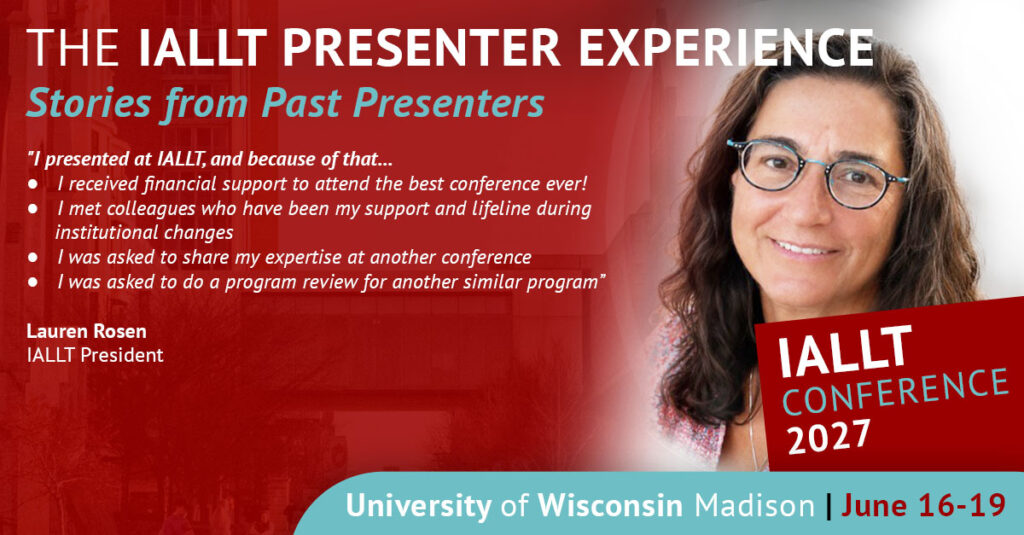
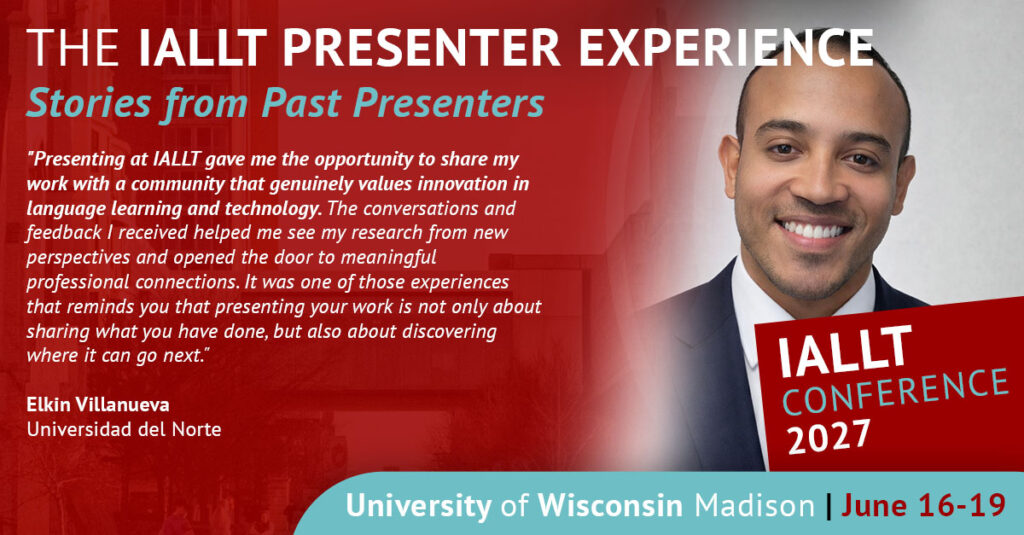
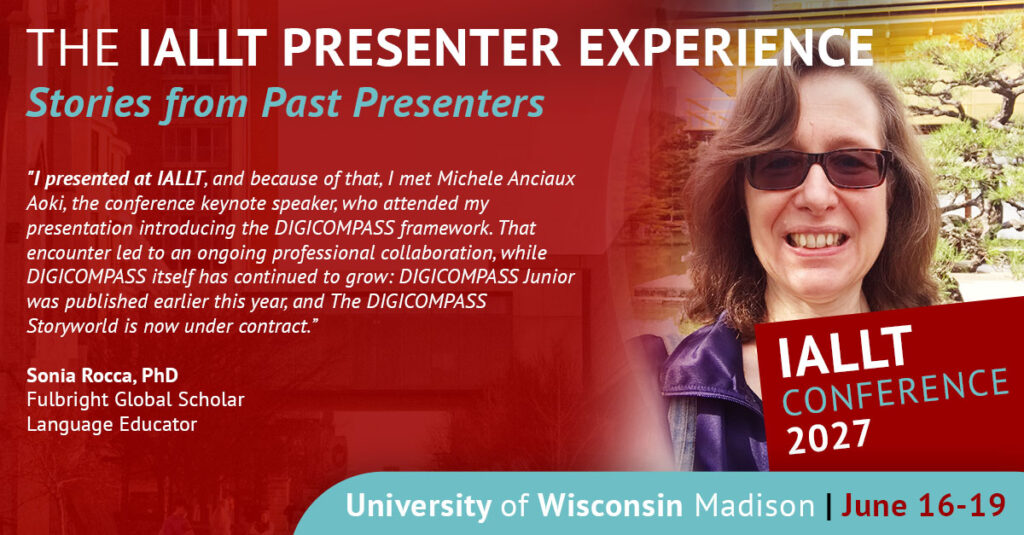
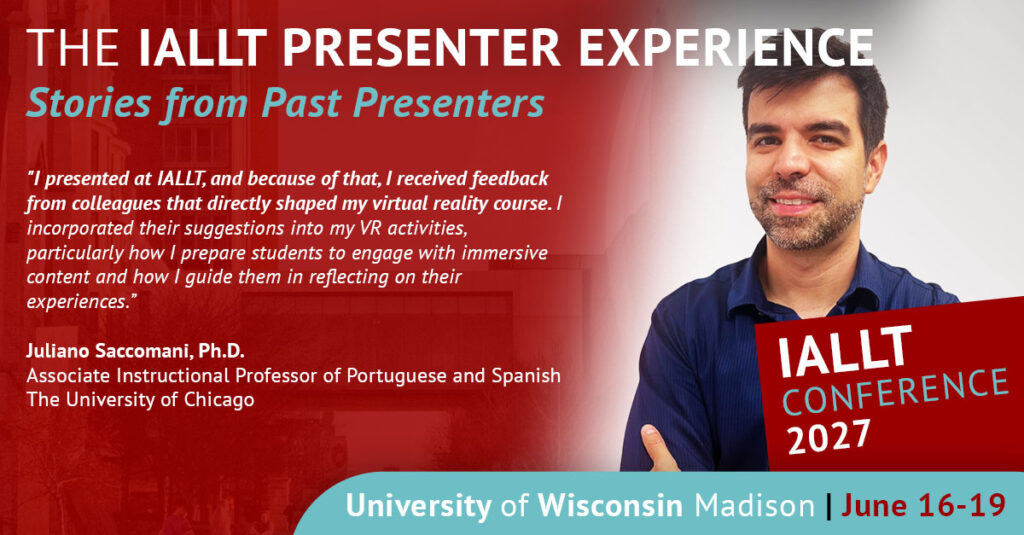
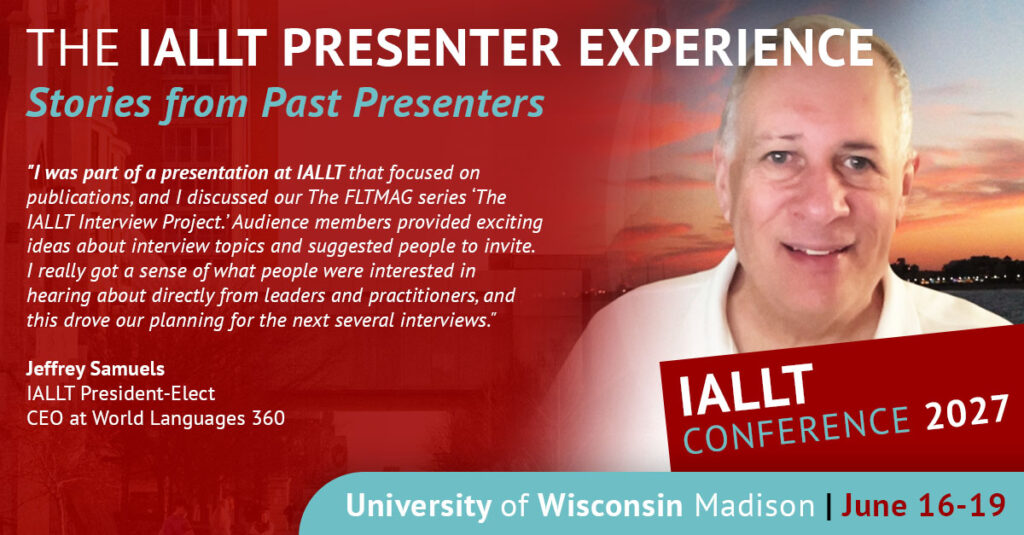
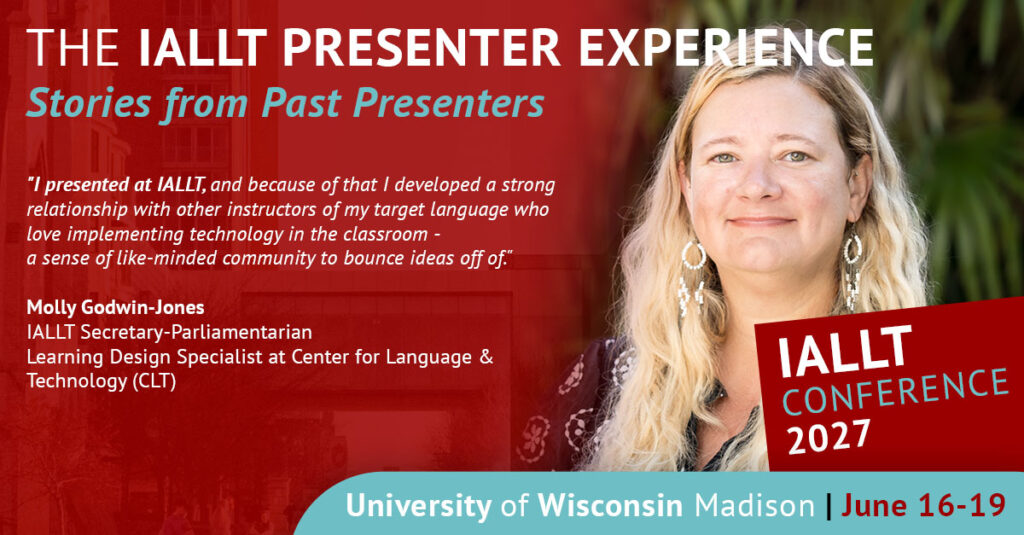
As I was considering ways to incentivize abstract submissions, I started thinking about why I go to professional conferences and what I get out of them. It gave me the idea to ask others the same question. Their answers are peppered through this article.
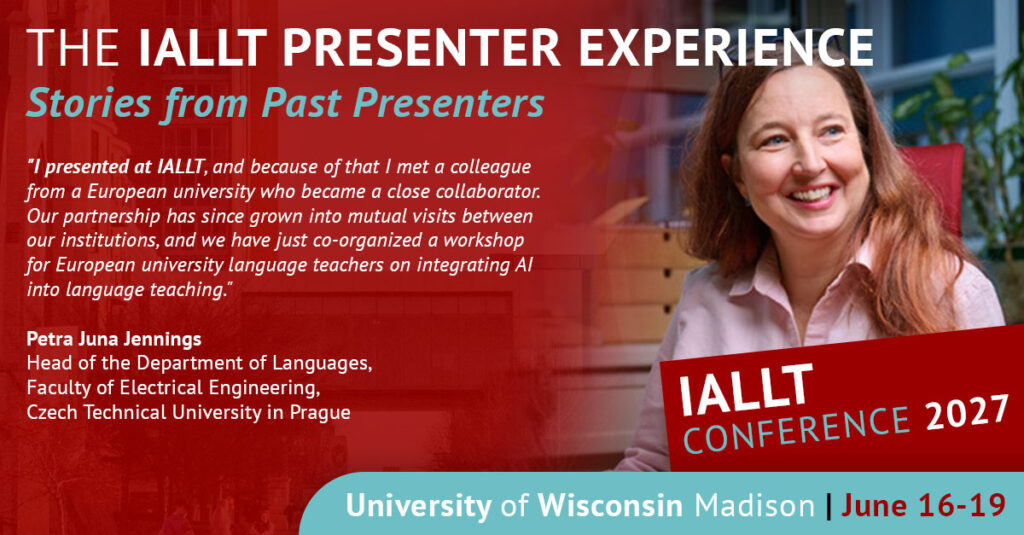
Petra Juna Jennings describes meeting a colleague from a European university who became a close collaborator. Their partnership grew into visits between their institutions and a jointly organized workshop on integrating AI into language teaching.
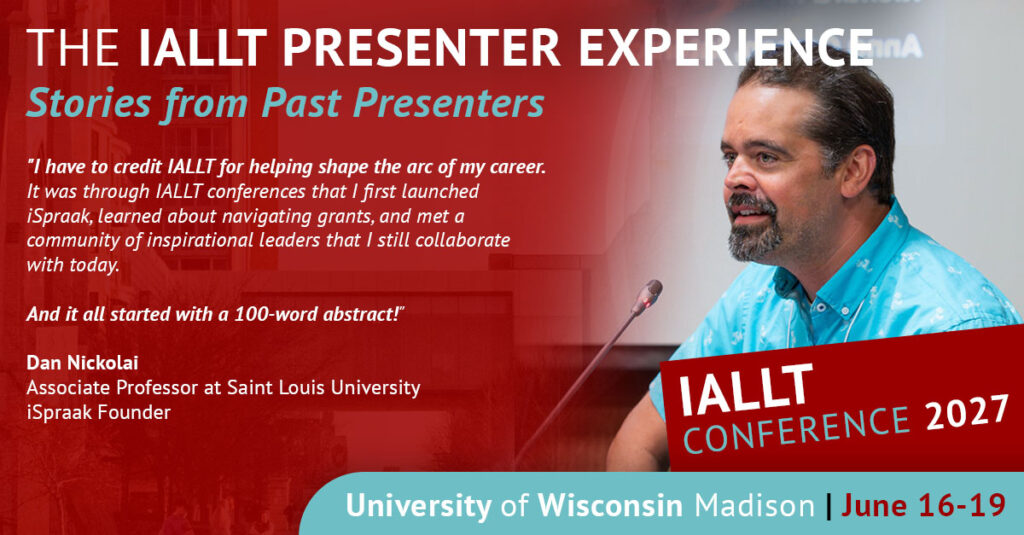
Dan Nickolai credits IALLT conferences with helping shape his career: launching iSpraak, learning about grants, and meeting colleagues with whom he continues to collaborate.
Other stories describe feedback that improved a course, connections that led to publications, and colleagues who became sources of support during institutional change.
These outcomes begin when someone decides that their work is worth bringing into the conversation.
Thinking Together About AI
There is also a particular urgency to gathering now.
AI is prompting questions about language teaching, learning, assessment, and the purpose of our work that reminds me of the changes brought by the internet. We are all experimenting, trying to make thoughtful recommendations for our learners and institutions, while dealing with a technology that seems to change on a daily basis.
As we gather, what can we ask each other, formally from behind a podium or informally, over a cup of tea, about what we’re seeing in our organizations. What are we gaining when using AI? What are we giving up? What should we recommend, and on what grounds?
We all have expertise to contribute. Collectively, we understand language learning, pedagogy, and technology. We have a responsibility to leverage our expertise and put it at the service of our profession.
Making Human Connections
If you are considering presenting, your classroom experience, your experiment, your unresolved question, or your different perspective may be exactly what another colleague needs to hear. You do not need to have everything figured out to contribute to our collective understanding.
Over the years, I have formed friendships through IALLT that extend well beyond my professional life. These are people whose work I admire and whose company I enjoy. I look forward to finding my people again, continuing our conversations, and welcoming new people into that circle.
That is part of what makes a conference worth the journey: the chance to return to a community and help it grow.
Bring your ideas. Bring your questions. Bring the experience that only you can contribute.
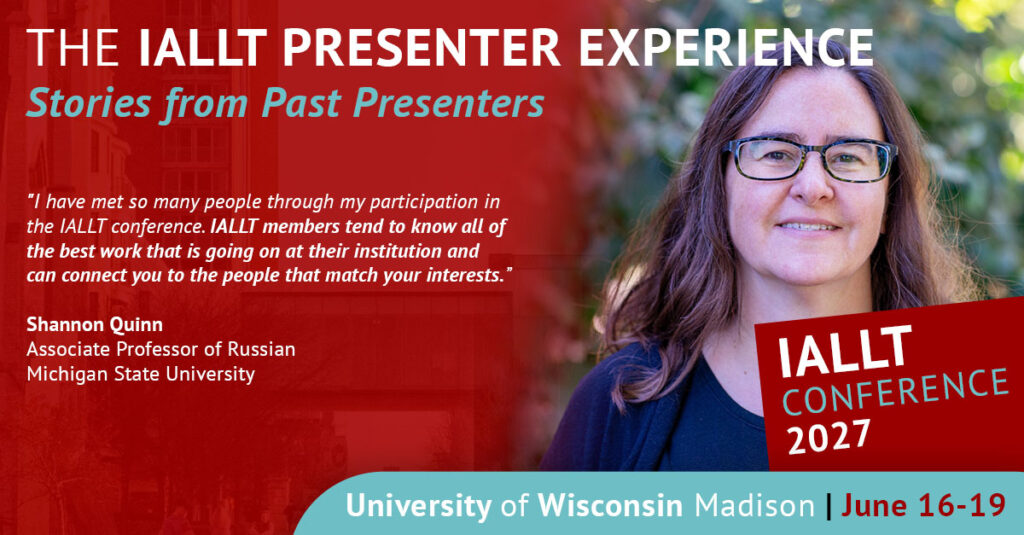
Join us and maybe next time, your experience will be showcased on an IALLT presenter experience slide!
To submit an abstract, visit the IALLT 2027 conference website.