
CALICO 2026 Conference Report
By Lisa Frumkes, Independent Educator
DOI: https://www.doi.org/10.69732/YWDB3075
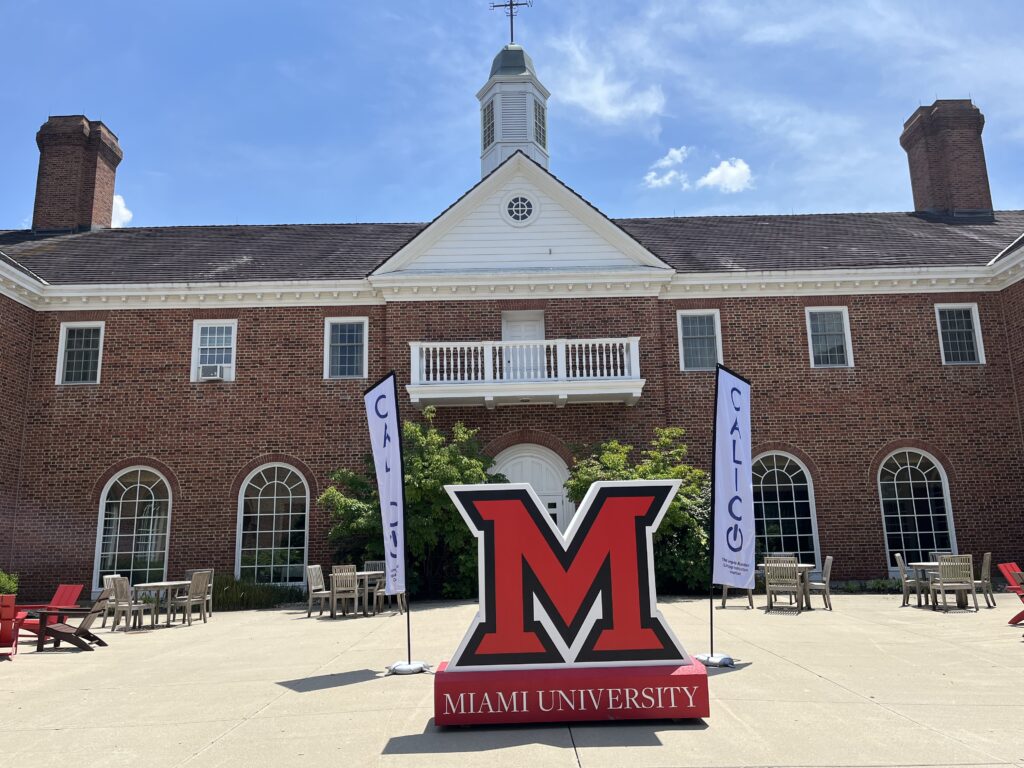
The 2026 symposium of the Computer Assisted Language Instruction Consortium (CALICO) was held July 7-11 at Miami University in Oxford, Ohio. This year’s theme was “Language with a Good Heart: Nurturing Human Connections in CALL.”
This conference theme, reflected throughout the conference, was further reinforced by explorations of the history, language, and culture of the Myaamia and other indigenous peoples. Miami University is named for the Myaamia people, upon whose ancestral homelands the university sits. Although the Myaamia people now reside in Oklahoma, the Myaamia Center at Miami University enjoys a unique relationship with the group. This fact, and many other reflections on the role of Miami University and the language revitalization movement were presented in the opening plenary by Dr. Hunter Thompson Lockwood, Project Coordinator at the Myaamia Center at Miami University. In his talk, Dr. Lockwood shared his experiences teaching the Myaamia language and using language to help the community explore identity and belonging. He discussed how technology has been used to preserve archival language materials, starting with photocopying, moving to digitization of materials, and today, providing workflow and data structures to preserve and search the data. Dr. Lockwood emphasized using technology to serve the people, language, and culture of indigenous communities, rather than focusing on the interests of researchers or the academic community. His primary message was: “Computers cannot learn your language for you; you must put language into your everyday life, and feel it in your heart.”
A related take on the impossibility of computers learning language for you came from Thursday’s keynote speaker, Soroush Sabbaghan, Associate Professor and Generative Artificial Intelligence (AI) Leader in Residence at the University of Calgary. His talk was titled “Language with a Good Heart in a World of Fluent Machines.” He reflected that the promise of CALL to help students produce and understand more language has, of late, been undermined by AI. Struggle is part of growth and learning, but AI shields us from that struggle, thereby preventing, rather than supporting learning. Dr. Sabbaghan’s advice is to use AI to create, rather than replace opportunities for practice, such as using AI to provide examples that our students can learn from and notice patterns in. He emphasized the need to keep AI technology close to the teacher, not the learner, and additionally, to use CALL to connect learners across distances.
In addition to these highlighted talks, CALICO (as always) offered half-day workshops in advance of the main conference. Two workshops focusing on AI were offered: one on using AI for professional development and another on using AI to support research in Second-Language Acquisition (SLA). In addition, a workshop on using Mixed Reality in language education was offered.
This year’s CALICO boasted approximately 90 30-minute presentations, eight of which were offered online. In addition, there were six 70-minute panels and eight meetings of Special Interest Groups (SIGs), including SIGs on Teacher Education, Immersive Realities, and AI. There were also eight poster presentations as well as 16 courseware demos.
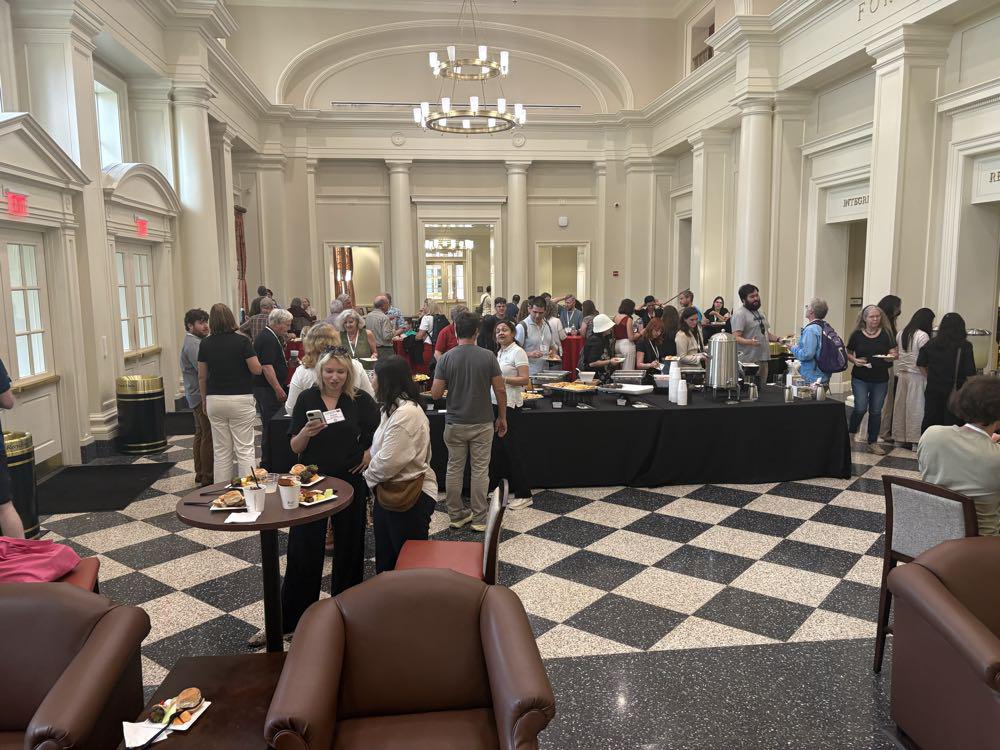
While the predominant topic of many of this year’s presentations was AI, other popular topics included virtual reality, mobile-assisted language learning, games in education, and storytelling, including fan fiction and interactive fiction.
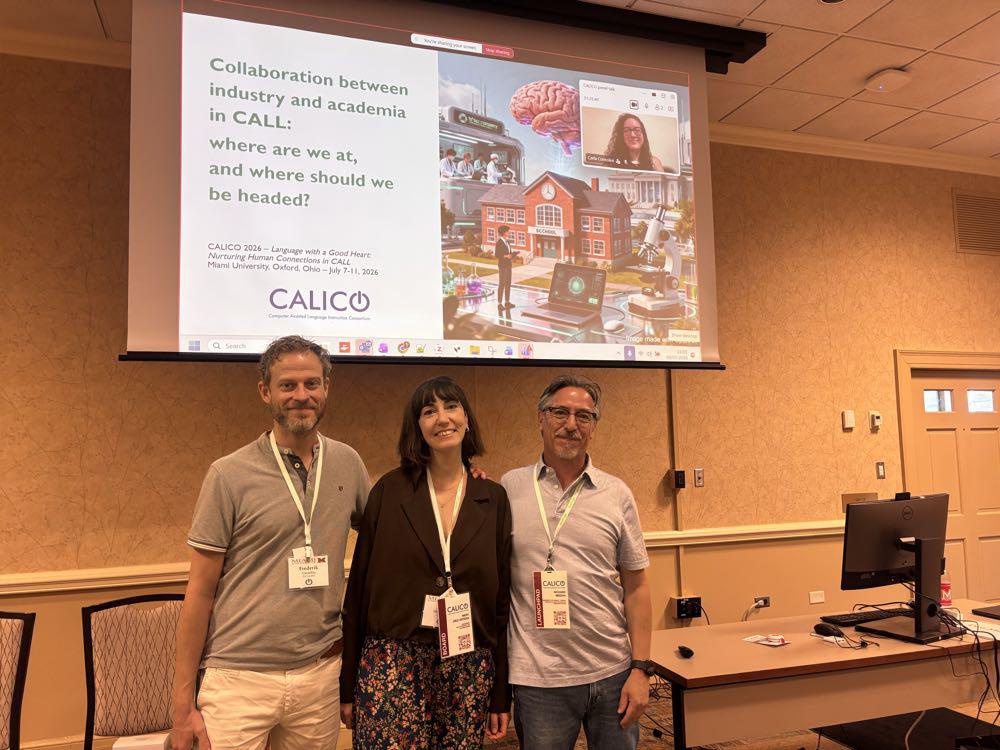
One panel, entitled “Collaboration between Industry and Academia in CALL: Where Are We, and Where Should We Be Headed?” considered the benefits that accrue when the academy and industry collaborate to conduct research. The discussion was led by Frederik Cornillie, who splits his time between KU Leuven (a university) and imec (a company in Belgium). The panel included two people working in industry (Mery Diez-Ortega of Linguineo in Belgium and Tricia Thrasher of Immerse, based in the US) and two working in academia (Richard Medina of the Center for Language & Technology, University of Hawai`i at Mānoa and Carla Consolini of the University of Oregon). The panel acknowledged the difficulties of conducting joint research, one of which is the mismatch between long academic timelines and short industry ones. In addition, they emphasized the necessity of ensuring that the project goals of the two groups are aligned so that the ends of both are served.
Boris Yelin of Northeastern University presented on “World Language Placements in Higher Ed: A Panorama.” He was attending CALICO for the first time, thanks in part to a grant from World Languages 360. Boris’s talk focused on the wide range of tests used by universities to place incoming students into language classes. Since the language placement test is often a student’s first contact with world-language departments, a good experience can make the difference between students choosing to take language classes or opting out of them. Dr. Yelin noted that existing tests too often focus on grammar and vocabulary and rely on multiple-choice items, and don’t serve the needs of all languages equally well. Though many institutions use off-the-shelf tests, others still use tests developed in-house; there can be serious drawbacks to both types from the points of view of cost, reliability, and proctoring. He argues that a collaborative, inter-institutional effort to create a customizable, open educational resource (OER) placement exam would address many of these problems.
On Friday morning, the Language Flagship Technology Innovation Center at the University of Hawai’i at Mānoa presented its LaunchPad event. As in past years, this shark-tank-style competition featured representatives of language-learning startups pitching their products to a panel of five judges. The 2026 LaunchPad competitors were:
- Haluk Olcay Tuncay, Co-founder and CEO of Socrates Lab, who presented a platform aimed at higher education and uses AI tutors to provide feedback and support to language learners;
- Benjamin Altschuler, CEO of Speakology AI, who demonstrated how his platform’s realistic, AI-powered tutors engage learners in conversation while providing feedback;
- Matthew Wise, Founder of Talio Language, who shared a platform that provides speaking practice to learners and provides instant, AI-generated feedback.
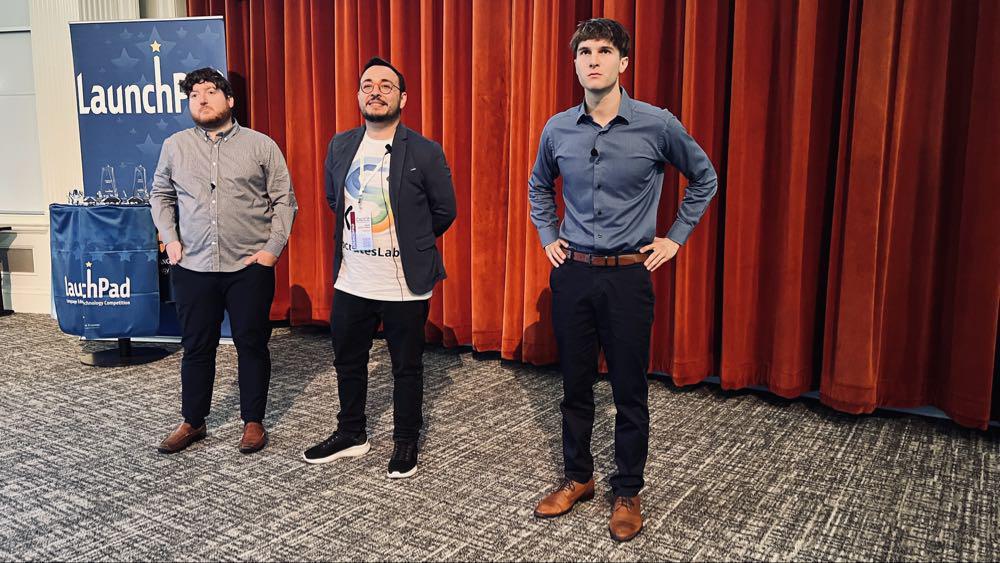
This year’s LaunchPad judges chose Speakology as the winner, and the audience agreed, voting to present the People’s Choice Award to Speakology as well.
As the conference concluded, CALICO recognized its own award winners:
- The Robert A. Fischer Outstanding Graduate Student Award was presented to Mohamed Almahdi.
- The Esperanto “Access to Language Education Award” for a language-learning website went to NedBox, an app for learning Dutch and created by Helena Van Nuffel, Mirjam Eren, Annelies Jehoul, Helga Van Loo, Sara Steurbaut, and Annelies Nordin.
- The Outstanding CALICO Journal Article Award was awarded to Frederik Cornillie, Julie Gijpen, Sameh Said-Metwaly, Steffen Luypaert, and Wim Van Den Noortgate for their paper “Toward Adaptive Spoken Dialogue Systems for Language Learning: Predicting Task Completion from Learning Process Data.”
- The CALICO Lifetime Achievement Award recognized Dorothy Chun, Professor Emeritus of the University of California at Santa Barbara.
CALICO welcomed two new board members: Richard Medina and Emilia Gracia, and thanked outgoing board members Mery Diez-Ortega and Robert Elliott. Regina Kaplan-Rakowski’s term as CALICO president continues for a second year.
CALICO 2027 will be held May 18-22 in Fairbanks, Alaska, hosted by Sabine Siekmann. There will be a call for proposals in the fall, with submissions due around October 31, 2026. The conference website will provide more details as the deadline approaches!
In addition, keep your eyes open for messages from your IALLT representatives to CALICO (Lisa Frumkes and Robert Elliott) in the fall, as we’ll again be soliciting proposals to fill approximately three IALLT-sponsored presentation slots at CALICO 2027. We look forward to seeing you in Alaska in the spring!