
ACTFL 2025 Conference Report – Focus on AI, VR, and FILL
By Kevin Richards, Michele Anciaux Aoki, and Shannon Donnally Quinn
DOI: https://www.doi.org/10.69732/USZM8334
The ACTFL Annual Convention and World Languages Expo took place November 21-23 in New Orleans. Over 6000 attendees had the opportunity to participate in a large variety of sessions and visit numerous exhibitors. In this report, several members of IALLT outline their experiences at the ACTFL conference. IALLT has an affiliate relationship with ACTFL, and a significant number of IALLT members attend and present at the annual convention. This year was no exception.
As it does each year, in addition to hundreds of sessions, the ACTFL Convention and Expo featured several keynote speakers, a number of awards, and the Exhibit Hall.
One of the keynote speakers was Miguel Cervantes, an actor who has played Alexander Hamilton in the musical Hamilton. Another was Steve Boyes, a conservationist who has dedicated his life to preserving Africa’s wilderness areas.
The finalists of the Teacher of the Year were: Rachel Benson, Nathan Campbell, Dan Call, Stephanie Bellot-Donaldson, and Ngan-Ha Ta. Congratulations to all of the finalists, and especially to the winner, Nathan Campbell, a Spanish teacher from Pennsylvania. ACTFL also gave a number of awards for achievement in language education. One of those was the NFMLTA/MLJ Paul Pimsleur Award for Research in World Language Education, which was given to Erin Fell, who will be presenting as a part of the IALLT webinars series on disabilities and language learning in February 2026.
AI (Artificial Intelligence) and VR (Virtual Reality)
Two of the most popular and cutting edge topics for the ACTFL conference this year were AI (artificial intelligence) and VR (virtual reality). Kevin Richards reports about the session that he presented together with Samanta Buffa, “New Tools for Building Language-Based Escape Rooms with AI and VR.”
The session drew about 150 attendees, a very engaged audience. We began with Samanta explaining how digital storytelling offers meaningful context that helps students notice, remember, and use vocabulary, grammar, and discourse patterns more easily. She highlighted that by incorporating AI into narrative generation and VR for environmental immersion, educators can explore the rich, interactive input these technologies provide.
I then began introducing the new tools; the first was a GPT module in ChatGPT called “ChatGPT: Language Learning 4o.” It offers a story-and-picture mode that can be prompted to function like an escape room. While that tool garnered some interest, it was nothing compared to the flurry of questions and requests for demonstrations that Google AI Studio elicited. You see, Google AI Studio can build tailor-made applications for your lesson plan. It can do so quickly with impressive results. In essence, it allows educators with little or no coding experience to create complex, language-based applications using natural language prompts and deploy them to the cloud, where they can be shared via simple web links. Attendees were shown a demonstration and encouraged to try it for themselves, and if you have not yet, you should, because it is something you should experience. The example I used was a single-prompt retro-style language-learning RPG titled “Gemini Language Adventure,” where users could customize the target language, proficiency level, and the adventure’s setting. Google AI Studio’s ability to quickly generate contextualized, interactive narratives and personalized lessons is a game-changer for delivering authentic, tailored practice and enhancing linguistic comprehension. The other tool that generated some buzz was the highly customizable 3D conversational avatars that can be built with Convai. I had one ready-made avatar, coincidentally named Samanta, who we were able to speak with during the session about the information I had uploaded to her knowledge bank (a clever way for instructors to keep conversations focused on a specific topic).
The second half of our session highlighted how AI and VR can work together to build a complete escape room infrastructure. We invited attendees to visit our Italian Villa in Bologna, built with a prompted 360 image in Thinglink, filled with puzzles, images, and clues generated by Gemini, music by suno.ai, and a jigsaw puzzle by jigsawify.com. The Thinglink platform offered us an excellent segue from AI tools to VR with AI-enhanced environments, since it can simultaneously produce experiences that work in both formats. The VR AI standout tools here include Meshy.ai, which allows users to generate true-to-image, realistic 3D models and textures from image inputs, perfect for filling a VR escape room with culturally relevant objects, and CityGen3D, which uses real-world map data to quickly produce entire 3D neighborhoods for development and exploration in VR.
While these tools can be integrated into game engines, a much simpler option for beginners is the free-to-use Meta Horizons Desktop Editor, which provides a straightforward, all-in-one platform for creating and hosting their projects. In addition to assets (from Meshy.ai and CityGen3D) that can be imported, the editor includes powerful AI tools to generate environments, objects, textures, sound effects, game logic, conversational avatars, and more. With these features and a variety of templates to start from, creators can easily shift from designing escape rooms to escape cities. Additionally, the experiences designed for Meta Horizons can be accessed for free on a variety of VR and non-VR platforms.
While my own research interests lie in the further development of even more authentic VR environments and populating these with a mixture of AI conversational avatars and real people, it was clear to me that, given the flurry of questions and requests for quick demonstrations, there is great interest in perhaps having a follow-up workshop on tools like Google AI Studio and Convai.
FILL (Facilitated Interdependent Language Learning)
For Michele Anciaux Aoki, the highlight of the ACTFL conference were the sessions that she attended about FILL (Facilitated Interdependent Language Learning). FILL is an approach that involves a language teacher facilitating a classroom of students who are all learning different languages. The following report is excerpted with permission from Michele’s substack about FILL.
I’ve been savoring the memories from the annual ACTFL Convention that took place last week (November 20-23) in New Orleans. We got to meet up with our growing FILL Community, and celebrate some of our FILL superstars.
I’ve shared stories about Ryan Allen, a teacher of Facilitated Interdependent Language Learning in Delaware. At the ACTFL Awards Ceremony on Friday night, Ryan was the recipient of the Leo Benardo Award for Innovation in K-12 Language Education.
The next day, Tom Welch and Ryan Allen co-presented their session, “FILL the Future: Theory in Action.” The audience sat in amazement as Ryan helped them imagine Facilitated Interdependent Language Learning in his Delaware classroom:
- One classroom, one certified Spanish teacher, no set curriculum.
- Twenty-three students learning one of ten languages, and the teacher isn’t teaching any of them directly.
- Students working interdependently using resources tailored to them.
- In one semester, nearly half of the students scored well enough on the STAMP test to fulfill Delaware’s World Language Requirement.
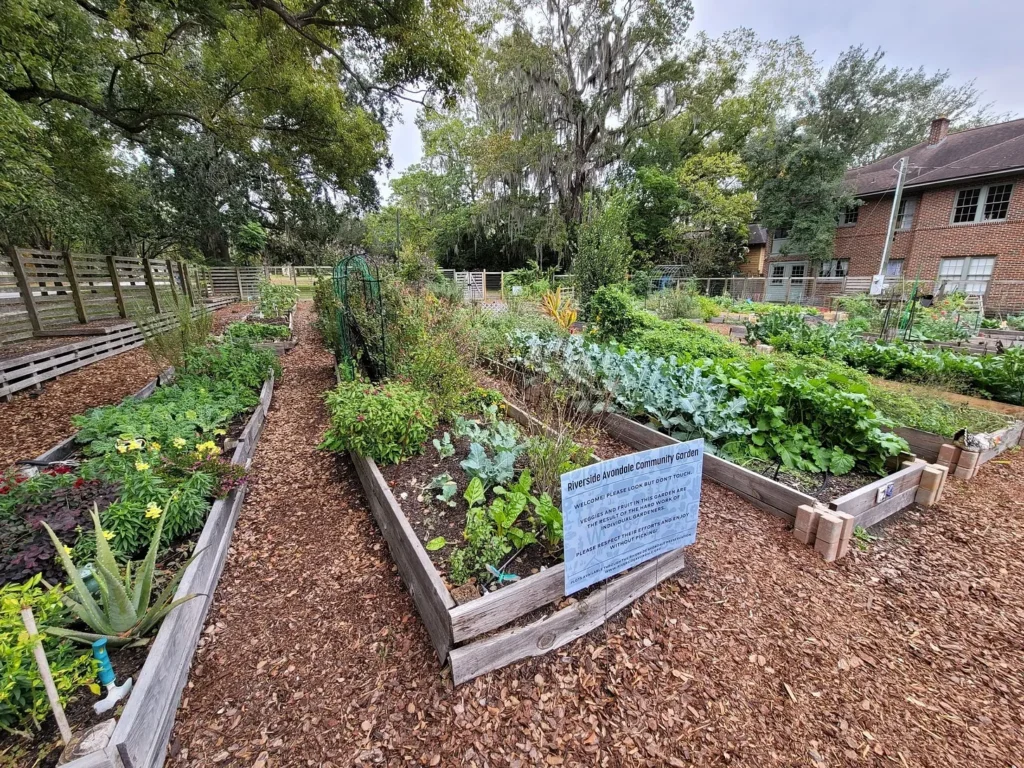
Tom, for his part, helped us visualize a FILL classroom as a kind of community garden, where community members each get their own plot, but have the freedom to choose what to plant.
Ryan’s FILL class truly is like a community garden, and Ryan is a master gardener. His role is not to micromanage each garden plot (each student’s learning path), but to be available as a resource on plant selection (choosing language learning resources), watering schedule (ensuring a healthy learning environment), weeding the garden (helping students evaluate what’s working, what’s not), and enjoying the harvest (celebrating the successful proficiency results).
Later on Saturday afternoon, we got another treat, a poster session by our Wisconsin colleague, Claudine Clark, “Facilitated Language Study: An Innovative Approach to Language Learning.” Facilitated Language Study (FLS) is the course in their district that “uses the FILL approach where students learn multiple languages in one classroom.”
You can visit Michele’s substack for more information about FILL and for links to some of the presentations on FILL at ACTFL.
ACTFL 2026
The next ACTFL Convention will take place November 20-22 in San Antonio, Texas.